
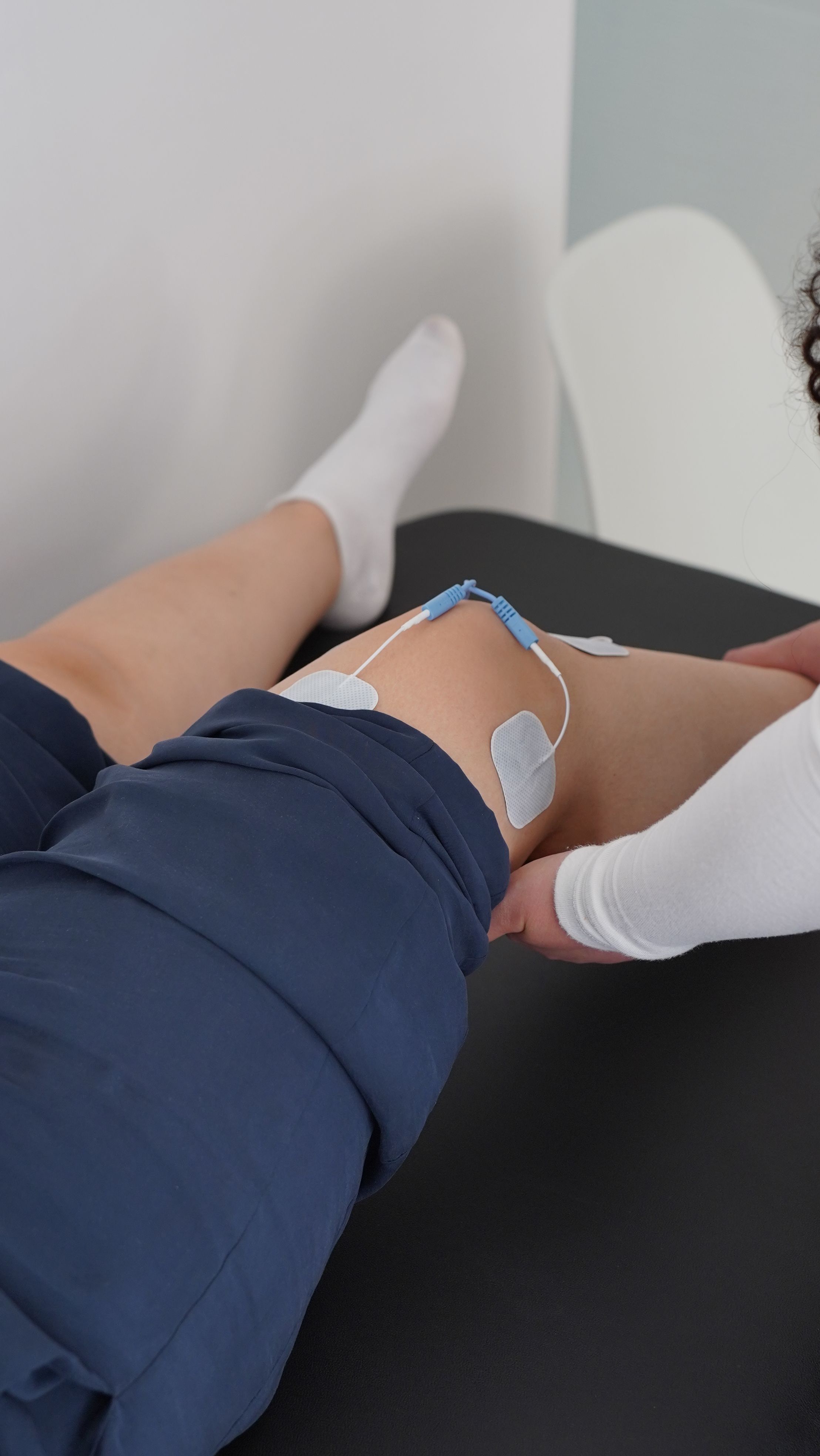
TENS (Transcutaneous Electrical Neuromuscular Stimulation)
How does TENS work?
TENS works through the delivery of small electrical impulses. These impulses start in the TENS unit (a small hand held machine), travel down electrodes, and into pads on the skin. These pads are specifically placed over painful areas. The electrical current helps block or reduce pain signals traveling to the brain and may also stimulate the production of endorphins, which are the body's natural painkillers.
What other names might this go by?
TENS is also known as TNS (Transcutaneous Nerve Stimulation) and EPM (Electric Pulse Massager). E-STIM (Electrical Stimulation) is a related term.
What to expect
When chronic pain is local and specific, the use of an electrical stimulator can be effective to dull the pain temporarily. Typically, this kind of modality is used after the intervention has proven to be useful in a clinical setting by a medical professional. You may be prescribed a home unit to use as needed for pain relief.
During treatment, electrodes are placed on the skin over or near the painful area. You will feel a tingling or buzzing sensation as the electrical current is delivered. The intensity can be adjusted to your comfort level.
Potential Risks
Patients with pacemakers should avoid this equipment because the electrical current could interfere with the pacemaker. There is a low occurrence of burns when the electrodes are not placed correctly. Skin irritation may occur at the electrode sites. Pregnant women should consult their healthcare provider before using TENS.