
There are many benefits of eating healthy and keeping a healthy weight. Using body mass index (BMI) under 25 is considered a healthy weight.
- Some examples are: Less risk of depression, type 2 diabetes, hypertension, and age-related cognitive decline.
- A healthy diet also decreases the risk of developing and dying from cardiovascular disease and cancer.
What does diet have to do with pain?
- Studies looking at the impact of diet on chronic pain are quite limited.
- The studies that do exist are beginning to find that both the amount you eat and what you eat can affect chronic pain.
- The amount a person eats is one of the most important factors in how much a person weighs, even more than how much a person exercises.
- Studies show that people who are overweight (BMI of 25 to <30) or obese (BMI of > 30) are much more likely to experience chronic pain.
- This includes pain in the joints (e.g., osteoarthritis, rheumatoid arthritis), abdominal area, back, hip, and neck pain, fibromyalgia, systemic lupus erythematous (SLE), and headaches including migraines.
- Pain can be reduced by as much as 20-50% when someone who is overweight or obese loses even as little as 10% of their body weight.
- Improving the quality of your diet is one way to lose weight while still being able to eat a wide variety of food.
Please watch the video below on how nutrition impacts chronic pain (Run time: 27:19 minutes)
High and low-quality diets
- People who eat a high-quality diet tend to weigh less, be better able to maintain weight loss, and feel fuller than people who eat low-quality diets.
- A high-quality diet is one that is high in:
- Fruits, vegetables, whole grains (e.g., brown rice, oatmeal)
- Nuts, seeds, seafood, legumes (e.g., black beans and lentils)
- Healthy oils and fats (e.g., olive and canola oil)
- A low-quality diet is one that is high in:
- Salt
- Red meat or processed meat (e.g., bacon and luncheon meat)
- Added sugars
- Unhealthy fats (e.g., butter and coconut oil)
Filling your plate with a high-quality diet
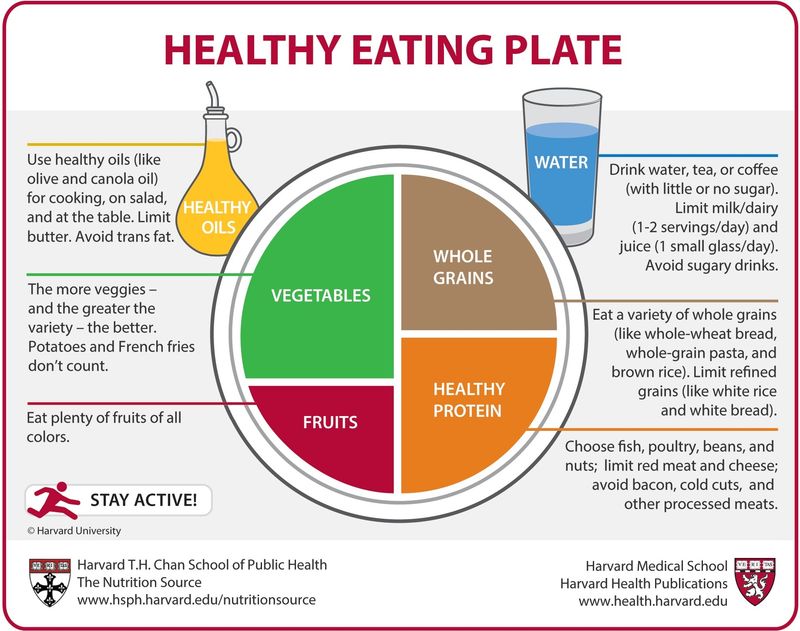
Diet can affect the symptoms that occur with chronic pain, such as stiffness and depression. The United States Department of Agriculture (USDA) conducted many studies over the years to define what makes a high-quality diet (see Tables 1 and 2).
| Food | Quantity |
|---|---|
| Fruits and vegetables | ½ of every meal |
| Whole grains | ¼ of every meal |
| Legumes and/or animal proteins | ¼ of every meal |
| Water | Primary beverage |
| Nuts | Small handful daily |
| Oils/fats | In moderation |
| Salt | 2,500 mg daily (1 teaspoon) |
Serving Size Guide
| Food category | Examples | Quantity |
|---|---|---|
| Fruits | Whole fruits, cooked or raw | ½ cup, 1 medium fruit |
| Grains | Brown rice, corn, whole oats, 100% whole wheat; potatoes and corn are also included in this category because they are digested like grains | ½ cup cooked rice, corn, or pasta; ½ cup cooked cereal or 1 cup ready-to-eat cereal; 1 slice of bread |
| Nuts | Peanuts or tree nuts | ¼ cup (1 oz) |
| Oils and fats | Butter, canola oil, olive oil | 1 tablespoon |
| Protein | Beans, chicken, eggs, fish, peanuts, tree nuts | 2 to 3 oz cooked lean meat, poultry, or fish; 1 egg; ½ cup cooked beans; ½ cup tofu; ¼ cup hummus; 1 oz nuts |
| Vegetables | Cooked or raw | ½ cup (1 cup for leafy greens) |
Effects of added sugar on chronic pain
- Eating high amounts of added sugar is associated with chronic pain.
- For example, people who eat high amounts of added sugar in their diet are almost 50% more likely to have chronic back, hip and neck pain.
- Added sugars are those that are added to our foods (e.g., table sugar, corn syrup, maple syrup, honey, etc.).
- Beverages are the number one source of added sugars in the typical American diet. Examples of this are tea, coffee, and soft drinks or sodas.
- The American Heart Association recommends that women eat no more than 6 tsp (i.e., 30 grams) and men eat no more than 9 tsp (i.e., 44 grams) of added sugar daily.
Alternatives to added sugar
- Simple ways to lower your sugar:
- Switching to water or diet beverages
- Add your own sweeteners to unsweetened coffee and tea
- Eat fruit instead of traditional desserts such as cookies, candy, cakes, donuts, etc.
- The USDA recommends that adults eat 2 cups of fruit or 1 cup of dried fruit daily.
Frequently Asked Questions
- Focus first on eating a healthy and balanced diet.
- Based on research results, people can eat different types of diets as long as they eat foods consistent with a healthy diet.
- Example: The Healthy Plate strategy emphasizes filling 35% of the plate with vegetables, 15% with fruit, 25% with whole grains, and 25% of the plate filled with healthy protein.
- There is not enough evidence available to conclude that any special diet is indicated specifically for chronic pain.
- Different people react differently to food and nutrients.
- Although current research outcomes do not link any specific foods to pain, some people may have unique reactions to foods and nutrients.
- Try to eat a wide variety of healthy foods if you choose to cut certain foods out of your diet.
- Some foods will help you make anti-inflammatory chemicals.
- Including these foods can help you feel better.
- Your diet will be naturally anti-inflammatory if you eat foods like:
- Blueberries
- Vegetables like kale or broccoli
- Whole grains like brown rice
- Whole grain bread
- Foods that are rich in healthy fats such as nuts, seeds and fatty fish
Resources
Skip accordion section (6 items)- Nutrition & Cirrhosis | (wellnesstoolbox.ca)
- Cirrhosis and a High Protein Diet Video
- Cirrhosis and a Low Sodium Diet Video
- American Academy of Family Physicians Patient Information Resource
- Centers for Disease Control and Prevention, Division of Nutrition, Physical Activity, and Obesity
- Harvard University Nutrition Source
- U.S. Department of Agriculture, Choose My Plate
- National Institute of Aging "10 Tips for Eating Healthy on a Budget" accessed August 19th, 2019.
- What is SNAP: S.N.A.P. stands for the Supplemental Nutrition Assistance Program. The program provides you with money to help you afford food each month.
- Supplemental Nutrition Assistance Program: If you need help completing the SNAP application, contact the Department of Human Services (DHS) at 1-855-275-6424 or here are directions for applying online for SNAP from the nams,vnma.x, Food Gatherers.
- Women, Infants and Children (WIC) - Provides supplemental nutrition support for low-income pregnant, breastfeeding, non-breastfeeding postpartum women, infants and children up to five years of age who are at nutritional risk. To determine if you are eligible and to apply for benefits visit - https://www.fns.usda.gov/wic
The cost of groceries gets a lot of attention in the news.
- Almost 14% of Americans were food insecure in 2024
- Food insecure: not having access to food
- Healthy foods such as olive oil, nuts, fresh vegetables and fruits can be expensive.
- Consider checking to see if you qualify for the U.S. Department of Agriculture's Supplemental Nutrition Assistance Program (SNAP), a program that helps people buy healthy foods.
- You may be eligible for the USDA's Women's Infant and Children program if you are pregnant, nursing, or if you have a young child (see links to more information in the "Resources For Healthy Eating on a Budget" section).
- Ask about discounts.
- Ask your grocery store if they have a senior discount or a loyalty or discount card.
- Besides getting items at a lower price, you may also get store coupons.
- Use coupons when you can.
- Coupons only help if they are for things that you would buy anyway.
- Sometimes, another brand costs less even after you use the coupon.
- Consider store brands- they usually cost less.
- These products are made under a special label, sometimes with the store name.
- You might have to look on shelves that are higher or lower than eye level to find them.
- Be aware that convenience costs more.
- For example, buy whole chickens and cut them into parts.
- Shred or grate your own cheese and avoid instant rice or instant oatmeal.
- Bagged salad mixes cost more and might not stay fresh as long as a head of lettuce.
- Look at unit prices.
- Those small stickers on the shelves tell you the product price and the unit price – how much the item costs per ounce or per pound.
- Compare unit prices to see which brand is the best value.
- Try to buy in bulk.
- Only buy a size that you can use before it goes bad.
- If you buy meat in bulk, decide what you need to use that day and freeze the rest in portion-sized packages right away.
- Focus on economical fruits and vegetables.
- Bananas, apples, oranges, cabbage, sweet potatoes, dark-green leafy vegetables, green peppers, and regular carrots are often less expensive than other fruits and vegetables, especially when they are in season.
- Think about the foods you throw away.
- For less waste, buy or cook only what you need.
- Resist temptations at the checkout.
- Those snack foods and candy are put there for impulse buying. Save money and avoid empty calories!
End of accordion section