

Cirrhosis of the Liver
Liver basics:
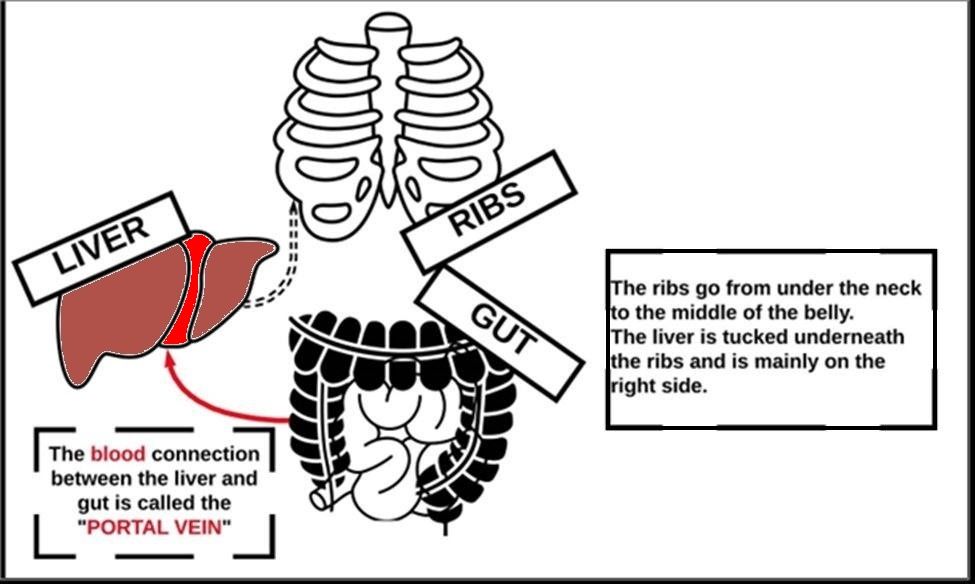
Where is the liver?
The liver is located under the ribs on your right side. It is connected to your digestive system (gut) by a blood vessel that is called the portal vein. The image below shows the front of the body.
What does the liver do?
The body cannot survive without the liver. The liver does many important things:
- Cleans the blood
- Stores vitamins and minerals for the rest of the body to use as needed
- Makes things that help the body function properly
What are the functions of the liver?
| Liver function: | Example: | What this does: |
|---|---|---|
| Makes things | Bile | Helps digest food |
| Albumin protein | Does many things, including keeping water from leaking out of blood vessels | |
| Clotting proteins | Prevents bleeding after a cut | |
| Anti-clotting proteins | Prevents clots in blood | |
| Hormones (many) | Helps make platelets (part of blood), keeps blood pressure regular, keeps bones and muscle healthy, keeps iron level normal for blood making | |
| Cholesterol | Different types of cholesterol affect the heart in different ways, both good and bad. Cholesterol is also needed to build hormones made by other organs. | |
| Glucose | A sugar that powers your body (your liver has to make it if you have not eaten for a few hours) | |
| Cleans blood | Ammonia removal | The body’s digestion or breakdown of protein makes a toxin (ammonia) which is toxic to your brain and muscle |
| Bilirubin removal | Comes from breakdown of old red blood cells and the liver usually disposes (too much bilirubin happens when liver is not functioning properly, causing jaundice) | |
| Stores things | Vitamins | Vitamins A, D, E, K, and B12 |
| Minerals | Iron, copper | |
| Energy | Sugar, fat |
What are Liver Tests?
Please watch this video explaining liver tests (run time: 5:56).
What is cirrhosis?
Scarring of the liver due to liver disease is called cirrhosis. Many things can cause liver disease:
- Viruses - like hepatitis B or C
- Toxins like alcohol or a buildup of liver fat that is often associated with diabetes or being overweight.
- Something inherited through your genes or caused by the body’s immune system hurting the liver cells.
Basically, all liver diseases cause inflammation in the body. Inflammation is redness, swelling, pain or heat. It is a protective reaction to injury, disease or irritation. It’s like if you burn your skin and it becomes red (inflamed). When the redness fades, you are left with a scar. In the liver, the same thing happens. Inflamed liver cells get replaced by scar. This is called fibrosis. Cirrhosis develops when fibrosis becomes severe. A liver with cirrhosis is hard, bumpy, and often shrinks.
Click each of the 3 boxes for more information about compensated cirrhosis, decompensated cirrhosis, and cirrhosis-related pain.
The earliest stage of cirrhosis is called compensated cirrhosis. You may have no symptoms at this stage. In fact, a person may live many years with cirrhosis without knowing it. If your liver disease is treated, the cirrhosis could stay ‘compensated’ for many years. But the liver’s condition may worsen if the cause of the cirrhosis is not treated. For example, if you continue to drink alcohol, or if hepatitis or other causes of cirrhosis are not treated, your liver function will likely continue to worsen. Liver function can improve if the cause of liver disease is treated, such as stopping alcohol, or treating hepatitis. The liver can regenerate, but recovery takes time.
Symptoms of cirrhosis
Symptoms of cirrhosis may include:
- Severe itch
- Muscle cramps
- Sleep problems
- Falls
- Sex trouble and/or dysfunction
As cirrhosis progresses, more symptoms may develop. These include:
- Low energy
- Poor appetite
- Weight loss
- Loss of muscle
Cirrhosis does two things:
- Decreases the liver’s ability to do the things it needs to function.
- Changes the way the blood flows through the body.
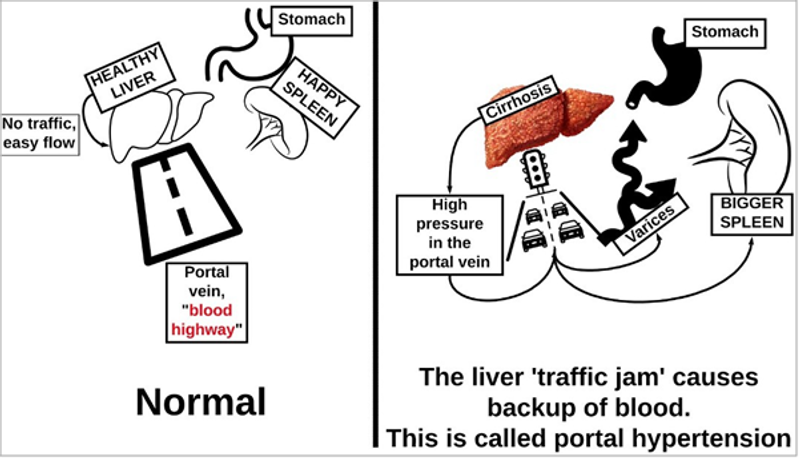
All blood flows from your gut to your liver. Blood normally flows through the liver like an open road, but cirrhosis causes a traffic jam for the blood flow (see figure 2). As blood flows more slowly, it causes a buildup of pressure in the portal vein, which is the connection between the gut and the liver. This is called portal hypertension.
The result is a backup of blood that causes many problems:
- It can reroute blood through veins called “varices”. Some varices can be found in the tube that carries food from your mouth to your stomach (the esophagus) or in your stomach itself. Sometimes varices bleed. This is described in more detail later.
- It causes the spleen to grow big as it fills with blood. The spleen takes on so much blood, it ends up soaking up things like platelets, lowering the number of platelets that can be found on blood tests.
- If blood is being routed away from the liver, then it doesn't get cleaned by the liver. This causes toxins to flow freely in the blood.
- By directing blood away from the liver, less blood goes to the heart. This can stress the body, particularly the kidneys.
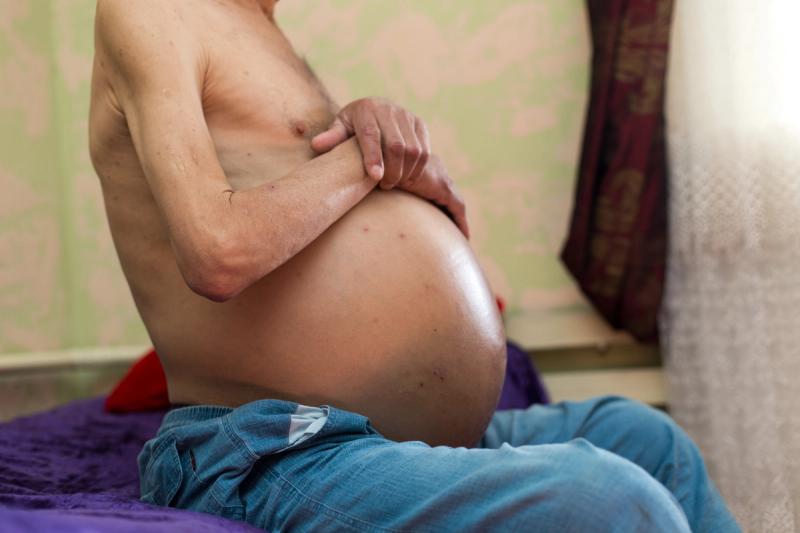
Increased pressure in the portal vein also causes fluid to build up in the abdomen (ascites) (pronounced “a-sigh-tees”), causing the belly to swell.
- There may come a time when the stage of cirrhosis becomes “decompensated cirrhosis.” At this stage you can also develop the following serious problems:
- Bleeding varices - Internal bleeding from swollen blood vessels in the esophagus
- Ascites - a buildup of fluid in the belly
- Encephalopathy (pronounced “en-sef-a-lop-a thee”) - confusion from the buildup of toxins in the blood
- Jaundice - yellowing of the eyes and skin
Sometimes even in this late stage, the liver can slowly heal if the cause of cirrhosis is removed (such as alcohol). Other times, the only way to cure cirrhosis is to replace the sick liver with a healthy liver – this is called liver transplantation.
Please watch this video (run time: 5:46): What is Cirrhosis found here: https://careguides-videos.med.umich.edu/media/t/1_51cfdvse/217471463
What is cirrhosis-related pain?
- Between 40-79% of people with cirrhosis have pain.
- Pain and fatigue from cirrhosis can make it hard to perform daily life activities.
Symptoms of cirrhosis-related pain
- Muscle cramps
- Bloating
- Pressure in the belly
What causes cirrhosis-related pain?
- Scar tissue is one source of cirrhosis-related pain.
- Pressure from ascites (fluid in the belly).
- Tissue and nerve damage.
- Muscle weakness can also cause pain.
Diagnosis of cirrhosis-related pain
- Imaging (MRI, CT) can be used to diagnose cirrhosis.
- A biopsy (taking a sample of the liver tissue) can give more information about cirrhosis.
- Talk to your doctor about cirrhosis-related pain.
Who treats cirrhosis-related pain?
- Hepatologists (liver doctor) - doctors who are also gastroenterologists and have extra training on caring for the liver.
- Palliative care: doctors who specialize in managing pain and symptoms related to pain.
- Psychologists - healthcare providers who use mental and behavioral skills to improve quality of life.
- Occupational therapists- teach ways to save energy and improve quality of life. Some occupational therapists help with managing swelling in the legs that can cause pain.
Treatments for cirrhosis-related pain
Self-care
- Ask your doctor about over- the- counter medicines and supplements before use.
- Pickle juice – a sip of kosher or dill pickle juice (a splash at the back of the throat) can stop a muscle cramp.
- No more than a sip should be used.
- Relaxation – learn about meditation.
- It’s important to get enough sleep.
- Exercise – strengthening exercises and tai-chi can be helpful.
- Healthy eating- eating a diet low in salt can reduce bloating.
- Energy conservation during activities
- Energy conservation means prioritizing what is most important and not overexerting yourself.
- Planning ahead with self- care tasks and resting before exhaustion sets in can help.
Example: when getting ready to shower, set supplies out in advance, rest for a period of time, then shower, sitting on a shower chair if necessary. Use a robe to help dry off. Rest, and finish getting dressed after a period of time.
Watch this video on Pacing (run time: 3:06 minutes)
- Practicing gratitude – changes how we experience pain.
- Social support – feeling loved and supported changes how pain is experienced.
Professional care
- Cognitive restructuring.
- Approach used by pain specialists to help make pain more manageable.
- This helps to make pain less overwhelming by changing how it is experienced.
- Acupuncture: using needles to change how pain is experienced.
- Medication options
- Acetaminophen (Tylenol): Tylenol is the safest pain medication as long as no more than 2000mg (2 grams) is taken in 24 hours.
- Taking more than 2000mg in 24 hours can cause liver failure.
- An extra-strength pill has between 500-650 mg of acetaminophen.
- The bottle tells how many mg each pill has, so it’s important to look at the bottle you’re using.
- Lidocaine patches can be helpful for some pain in small/specific areas.
- Over the counter Capsaicin cream is helpful for nerve pain.
- Opioid medications increase the risk of hepatic encephalopathy (especially if constipation develops) and should be used cautiously- talk to your doctor.
- Non-steroidal anti-inflammatories (NSAIDs) like Motrin or Ibuprofen should be used cautiously or not at all (especially if you have fluid in the belly).
- Ask your doctor about what medications are best for you and if topical non-steroidal anti-inflammatories (which are safer) are best.
Click each box below to learn more about cirrhosis treatment.
What causes bleeding from esophageal varices?
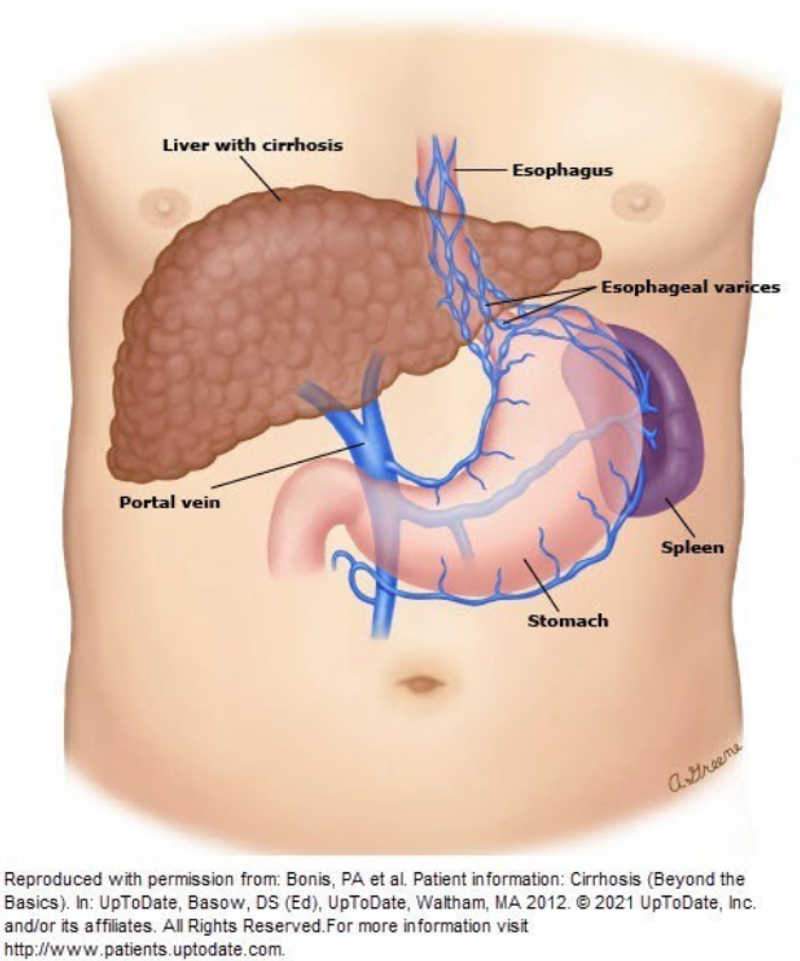
A backup of blood from the scarred liver (traffic jam causing portal hypertension) may cause the veins in the wall of the esophagus to enlarge. The esophagus is the swallowing tube that connects the throat to the stomach. The pressure inside the enlarged veins, called esophageal varices, is higher than normal. The increased pressure can cause the veins to burst, leading to sudden and severe bleeding.
What are signs of bleeding from esophageal varices?
Unless the varices break and bleed, you will have no symptoms. Signs of bleeding varices are life-threatening. You must immediately go to the emergency room if you have any of the following symptoms:
- Vomiting of large amounts of fresh blood or clots
- Black and tarry stool
What can be done to prevent serious bleeding?
If you have liver disease that could cause varices to form, your doctor may recommend that you have an upper endoscopy test (EGD) to determine if varices are present and what their size is. Larger varices have a higher risk of breaking and bleeding. There are three main treatments to prevent bleeding:
- Medications called beta blockers
- Banding
- TIPS procedure
Your doctor may decide to use one or all of these treatments, which are briefly described next.
- Beta blocker medication
Beta blockers are pills you can take to reduce blood flow and pressure in varices. Your doctor will generally start you on a very low dose of one of these drugs:- Propranolol (Inderal®), taken twice a day
- Nadolol (Corgard®), taken once a day
- Carvedilol (Coreg®), taken once or twice a dayWhen using propranolol or nadolol, your doctor may check your heart rate (pulse).
The goal of treatment is to give you enough of one of these drugs to reduce your heart rate by 25% but the Carvedilol dose is not adjusted based on the heart rate. The dose of medication will be increased slowly until the goal is reached. Most people with low blood pressure tolerate beta blockers well.
Tell your doctor if you get dizzy or lightheaded after taking these medications.
- Banding
If varices do bleed, doctors may apply rubber bands to the varices to block them. If the varices still bleed after treatment with medication and rubber bands, you may need a TIPS procedure (Transjugular Intrahepatic Portosystemic Shunt). - Transjugular intrahepatic portosystemic shunt or TIPS procedure
TIPS is the placement of a shunt (internal tunnel) within the liver to improve blood flow. It is performed through the veins and does not require surgery. TIPS can help control bleeding from varices if other simple measures fail.
Sometimes a TIPS procedure is used to prevent re-bleeding from varices. In some cases, it can also help to decrease fluid buildup (ascites). About 30 out of 100 (30%) of patients develop mental confusion after TIPS, and in some cases the shunt must be closed back down. Rarely, jaundice and liver failure develops after a TIPS procedure.
What is ascites?
One common problem caused by high pressure in the veins of the liver is ascites. Fluid leaks into the belly and begins to fill it up. This can make the abdomen (belly) enlarge, like a balloon filled with water. The legs can swell, too. All of this can be very uncomfortable.
What are the causes of ascites?
The most common cause of ascites is from portal hypertension, which is a buildup of pressure in the portal vein due to cirrhosis. The main thing that causes the extra fluid build-up in people with portal hypertension is salt intake (sodium). For this reason, your doctor will review with you the need for a low sodium diet.
What are the signs and symptoms of ascites?
In mild cases, there are usually no symptoms. As more fluid collects, the abdomen swells and you may experience:
- Increase in abdominal size
- Loss of appetite or difficulty eating, because there is less room for food
- Frequent heartburn
- Abdominal pain
- Back pain
- Changes in bowel function
- Fatigue
- Swelling in your feet and legs (edema)
- Difficulty breathing, especially when you are lying down
The most dangerous problem associated with ascites is infection, which can be life threatening. Go to the emergency room immediately if you have ascites and experience a fever or new severe belly pain.
How do you treat ascites?
- Avoid all alcohol consumption.
- Keep to a low salt (sodium) diet.
- The buildup of fluid is the result of too much salt (sodium) intake. Most of the salt in a person’s diet comes from processed foods, even for people who do not use a salt shaker.
- For this reason, it is important to reduce your salt intake by carefully reviewing how much sodium is in your food and drink.
- We usually aim for less than 2000mg of sodium per day.
- You may be asked to work with a nutritionist.
- Please note: even though fluid is building up, this is not a problem with water or fluid intake! It’s the salt/sodium that causes the fluid to build up in the belly. The key is to limit your salt intake, not your fluid intake.
- Take diuretic medications (“Water Pills”).
- Diuretics are medications that help the body get rid of the extra salt and fluid through the kidneys. Common medications include spironolactone (Aldactone®), and furosemide (Lasix®).
- One treatment plan begins with 100 mg of spironolactone and 40 mg of furosemide every morning.
- Weight (fluid) loss is often slow. If there is no weight loss in the first 2 weeks, the dose is gradually increased.
Response to treatment varies and finding out which treatment plan works best for you takes time, as the doctor adjusts the dose of medications over a period of weeks or months.
Paracentesis (Tap)
Paracentesis is draining fluid out of the abdomen with a needle. This is done using local anesthetic (lidocaine). Taps provide relief from ascites symptoms, but the fluid eventually returns. You must strictly follow sodium restrictions and diuretic therapy to slow down the build-up of fluid. Frequent taps can increase the risk of infection and cause an imbalance of nutrients (potassium and sodium) levels in the blood. Frequent taps can also worsen kidney function.
Monitor progress
During treatment, it is important that both you and your doctor monitor your weight and blood test results. This is especially true if you are taking diuretics (which may cause reduced kidney function and changes in your blood levels of sodium and potassium). The best way you can help the doctors manage your fluid problem is by recording your weight and dose of water pills (diuretics) every day.
Print the cirrhosis weight log to record your weight and medications intake.
In addition, keep track of dates when you have taps (paracentesis).
Transjugular intrahepatic portosystemic shunt (TIPS procedure)
TIPS is described in the section about treatment for severe bleeding (varices). In some cases, TIPS can help to decrease fluid buildup (ascites).
- TIPS is the placement of a shunt (internal tunnel) within the liver to improve blood flow. A TIPS procedure is performed through the veins and does not require surgery.
- TIPS can also help control bleeding from varices if other simple measures fail.
- About 30 of 100 (30%) of patients develop confusion after TIPS, and in some cases the shunt must be closed back down.
- Rarely, jaundice and liver failure develop after a TIPS procedure.
Liver transplant
Developing ascites as a complication of liver cirrhosis is a concerning sign. Liver transplant is the best treatment if you are an appropriate candidate, but unfortunately, not all people qualify for this procedure. Talk to your doctor about liver transplant if you have decompensated cirrhosis. See the section on decompensated cirrhosis for more information.
Special risks and considerations in ascites
Spontaneous bacterial peritonitis
Spontaneous bacterial peritonitis occurs when ascites becomes infected and it can be life threatening. Symptoms include fever and abdominal pain, but you may not have these symptoms in the early stages. If you have an infection of ascites, you will need to be admitted for IV (intravenous) antibiotics. After the first episode of peritonitis is treated, you will take an antibiotic pill to prevent future episodes of peritonitis. Sometimes we recommend antibiotics to prevent peritonitis even in people who have never had it.
Hepatic hydrothorax
This condition occurs when ascites fluid ends up in the chest. The diaphragm is the broad muscle that separates the chest and belly. Hepatic hydrothorax happens when fluid bubbles up and surrounds the lung, filling the space between the ribs and lung. About 1 in 20 people with ascites get hepatic hydrothorax. It causes shortness of breath that can be severe. The fluid can also become infected, which can be life threatening and have symptoms just like spontaneous bacterial peritonitis. The treatment is the same as ascites. Sometimes a treatment called thoracentesis is needed, where a needle is passed between the ribs to drain fluid.
Hepatorenal syndrome
This refers to serious, life-threatening kidney failure that sometimes develops in people with cirrhosis and ascites. To treat the condition your doctor will stop diuretic medications and will search for a cause that can be reversed such as dehydration or infection.
What is hepatic encephalopathy?
A poorly working liver may lead to the build-up of toxins. These toxins can cause problems such as:
- Falls
- Poor sleep
- Mood changes (crankiness)
- Poor concentration
- Inability to calculate (do bills, manage money)
- Less alertness – sleepiness, confusion, impaired judgment
If hepatic encephalopathy gets bad, these toxins can even cause a coma. See Figure 3, below. These changes are all symptoms of hepatic encephalopathy. Sometimes we call this “HE.”
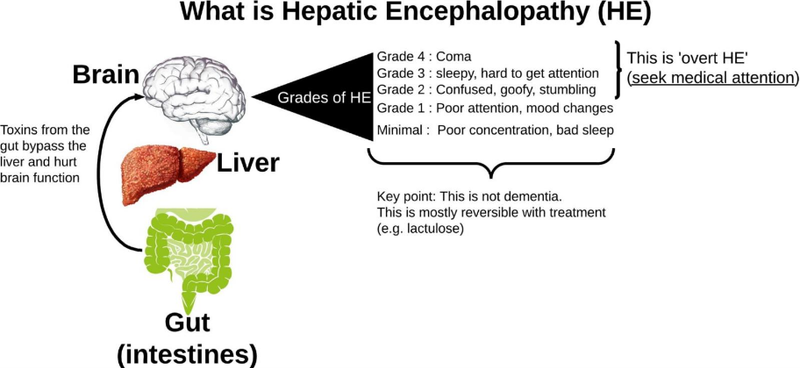
HE occurs when toxins from the gut bypass the liver and hurt brain function. There are different grades (levels) of HE. Grades 2-4 are serious and require immediate medical attention:
- Grade 4: Coma
- Grade 3: Sleepy, hard to get attention
- Grade 2: Confused, goofy, stumbling
- Grade 1: Poor attention, mood changes
- Minimal: Poor concentration, bad sleep
Key point: This is not dementia. This is mostly reversible with treatment with medicine such as lactulose.
How is hepatic encephalopathy diagnosed?
This diagnosis is made by a doctor, physician assistant, or nurse practitioner. We examine you, listen to you or your caregivers and use the information about what is happening in your life to make the diagnosis. There is no blood test for hepatic encephalopathy. It often occurs in people with high ammonia levels, but not always. People with low ammonia can have hepatic encephalopathy and people with high ammonia may not have hepatic encephalopathy.
How is hepatic encephalopathy treated?
- Your doctor may stop medications that can make you confused. Some of the main medications we worry about are called benzodiazepines, which include Ativan, Xanax, and valium. Some pain medications can also make hepatic encephalopathy worse.
- Lactulose is the primary medication used to treat hepatic encephalopathy. Lactulose is a syrup that helps flush toxins from your gut by trapping them in your stool and making you poop more frequently. Other laxatives or medications that make you poop more will not do the same thing as Lactulose. People usually start with 2 or more tablespoons of lactulose syrup once or twice a day. The dose is gradually increased until you have about 2-4 soft stools a day. Lactulose is one of the only medicines where it is up to you and your family to adjust the dose.
- Increase the dose if:
- Your stools are firm.
- You are having fewer than 2 stools per day.
- You are developing symptoms like worsening sleep, falls/stumbling, mood changes, or confusion.
- Decrease the dose if you have more than 4 loose stools per day.
- Some people will need a medication called rifaximin (Xifaxan®). This is an antibiotic (used to treat infections caused by bacteria) that only works in the intestine. This medicine lowers your risk of developing an episode of severe hepatic encephalopathy.
- Your doctor will likely recommend a high protein diet. Your body’s muscle plays a big role in cleaning your blood. We need to support it by making sure you eat enough protein. The general amount of protein we recommend is 1 gram of protein for every kilogram (about 2 pounds) of your body weight). You may hear from other doctors or websites that high protein is bad. That advice is outdated. Without high protein, you may lose muscle, experience more hepatic encephalopathy, and become weaker. For more information visit “Cirrhosis Nutrition Therapy”.
When should I go to the emergency room for hepatic encephalopathy?
Some people with this condition develop active and severe hepatic encephalopathy.
Go to the emergency room if you are:
- Disoriented
- Confused
- Falling asleep inappropriately
We want you to be seen in the emergency department if you have these symptoms because hepatic encephalopathy can be a sign of infection, dehydration, or kidney damage, and those issues need to be treated urgently.
Video resource: What is Hepatic Encephalopathy? (Run time: 4:33)
What is nutrition therapy for cirrhosis?
Nutrition therapy for cirrhosis consists of al low sodium, high protein diet. The following information will explain why this type of diet is important along with tips to help you follow it to the best of your ability.
- It helps the liver perform its many functions.
- Your body needs more protein and calories than it has in the past.
- The body may not be able to store as many nutrients as usual.
- It lowers the risk of infections.
- It lowers the risk of fluid retention (ascites).
- It provides energy for self-care and the activities most important to you.
How often should I eat?
- Eat every 2-4 hours when awake.
- Have a late evening snack before bed.
- Eat a snack in the middle of the night if you’re awake!
Low sodium diet
Why do I need to follow a low sodium diet?
Fluid buildup (often called ascites or edema) is a common complication with liver cirrhosis. Too much sodium in the diet can lead to more fluid buildup. Sodium is a mineral that helps regulate fluid balance in the body by attracting and holding onto water.
How do I follow a low sodium diet?
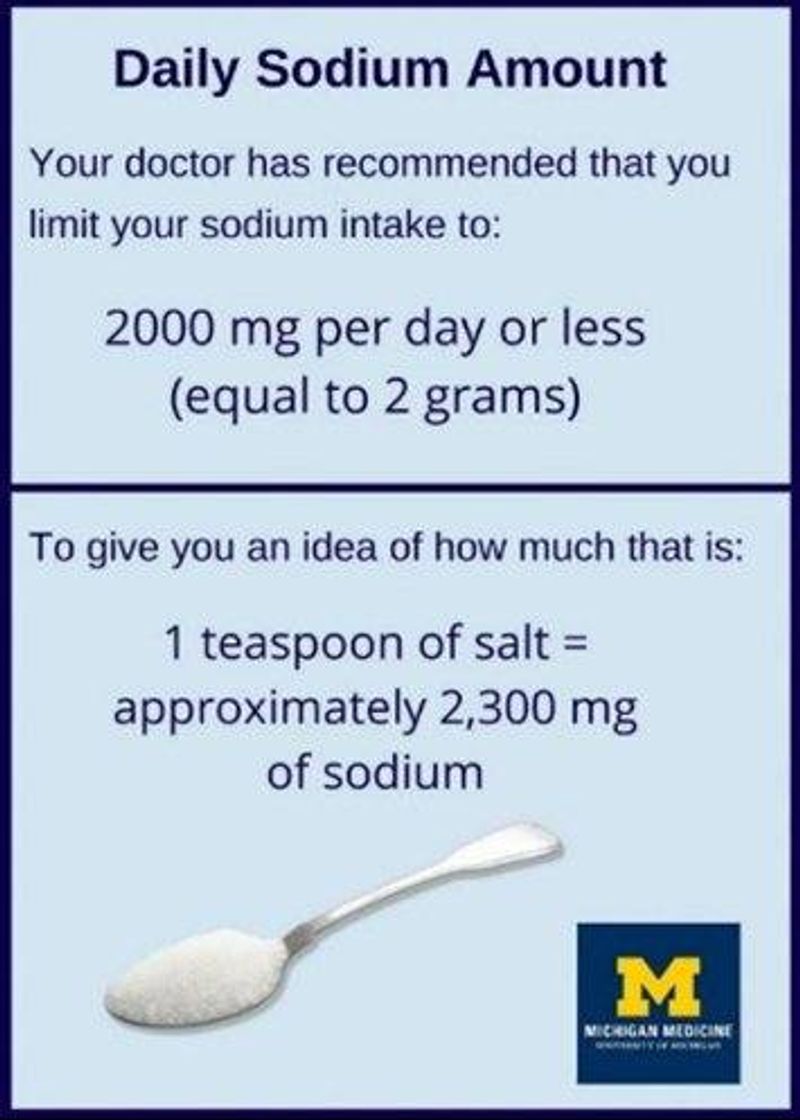
- Limit your sodium intake to no more than 2,000 mg (milligrams) per day.
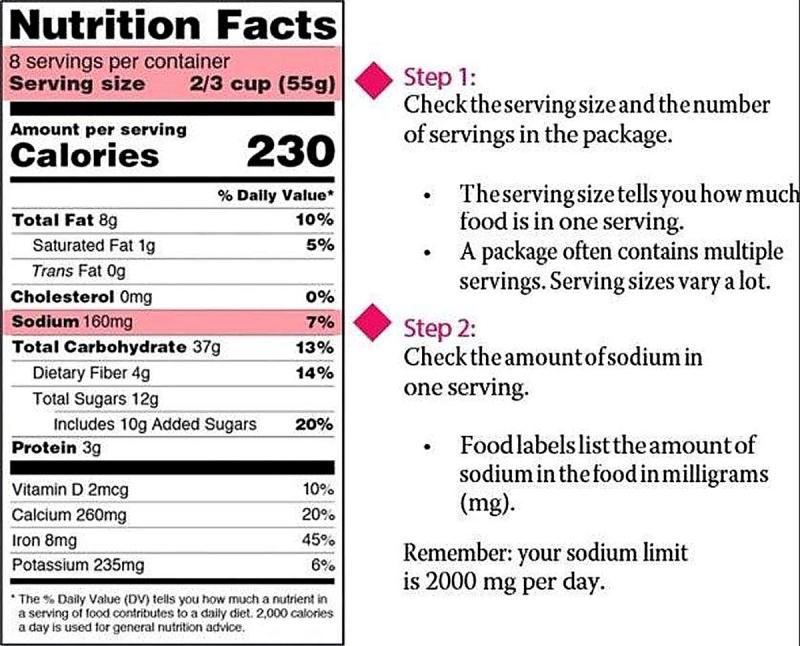
- Sodium is a naturally occurring mineral found in almost all foods. Read Nutrition Facts labels to determine how much sodium you are eating (see Figure 2 below).
- Always look at the serving size, first. Then, look at the sodium contents.
- The example below shows 160mg of sodium in 2/3 cup.
- Consider keeping a notebook and write down everything you eat throughout the day along with how much sodium each item contains, using Nutrition Facts labels, like in the Nutrition Facts example below.
- You can also use food tracking websites or apps such as MyFitnessPal.com or Cronometer.com to track your sodium intake. These are especially helpful when you come across a food without a Nutrition Facts label.
- Use restaurant and fast-food establishment websites to look up nutrition facts and information ahead of time to check the menu’s sodium content to make a healthier choice.
- Consider using www.healthyheartmarket.com for an online grocery store of just low sodium foods
Water softeners
If you use a water softener, it's important to know that water softener pellets can add additional sodium if they are made from sodium chloride. Potassium chloride pellets can be used as an alternative. Otherwise, bottled water is recommended.
What if I am told my sodium level is too low?
This is usually from having too much fluid buildup in the body. This does not mean you want to eat more sodium. Remember, eating too much sodium will make the fluid buildup worse. If you are told this, continue following your low sodium diet unless otherwise directed by your doctor.
Low-salt food list
| Choose these foods | Limit or avoid these foods |
|---|---|
| Meat, eggs: Fresh beef, pork, lamb, poultry, fish, wild game Fresh eggs | Fast food and restaurant food Meat, eggs: Processed meats (bacon, sausage, pepperoni, hot dogs, luncheon/deli meats, corned beef, anchovies, sardines) Vegetarian “meats”/ vegetarian entrees Smoked meats or fish, jerky Microwaveable/frozen meals Egg beaters |
| Milk, yogurt, cheeses: Milk or yogurt Frozen yogurt, ice cream Natural Swiss cheese Low-sodium cheeses Low-sodium cottage cheeses | Milk, yogurt, cheeses: Buttermilk, malted milk Processed cocoa Processed cheese Bleu, feta, and other salty cheeses Regular cottage cheese Dairy-free alternatives may be higher in sodium |
| Grains, starches: Low sodium bread, rolls, breadsticks, bagels Plain taco shells, tortillas Pasta, barley, rice cooked without salt Unsalted cooked cereal Dried beans, lentils, peas Unsalted popcorn, pretzels, crackers, chips | Grains, starches: Bread, rolls, breadsticks made with salt or cheese Stuffing mixes Pasta or rice with seasoning packets Instant hot cereals, ready-to-eat cereals Salted crackers Baking mixes such as cakes, pancakes, waffles, or muffins Salty chips, pretzels, crackers, etc. |
| Nuts and Seeds: Unsalted nuts and seeds Unsalted peanut butter or other nut butters | Nuts and Seeds: Salted nuts and seeds Salted peanut butter |
| Vegetables: Fresh/frozen vegetables without salt added Homemade tomato sauce or salsa | Vegetables: Canned vegetables/soups, vegetable juices Pre-made spaghetti/tomato sauces/salsa Instant mashed potatoes, boxed Sauerkraut, olives, pickled vegetables |
| Fruits: Any kind of fruit or fruit juice, fresh, frozen, or canned | Fruits: Adding salt to fruits (such as melon) Glazed or crystallized fruit |
| Beverages: Water, fruit juices Milk Coffee, decaf coffee, teas Cocoa made with milk Soda with no sodium | Beverages: Gatorade or other sports drinks Vegetable juices (V-8) Instant cocoa mixes Instant cappuccino mixes |
| Desserts: Gelatin desserts Homemade tapioca or rice pudding Custard made with milk Hard candy Homemade cake, cookies, pie, sherbet, ice cream (limit to 1 serving or less per day) | Desserts: Instant pudding or other pre-packaged dessert mix Frozen pies Store bought cookies, muffins, cakes, etc. |
| Fats and oils (use sparingly): Olive and avocado oil Unsalted butter | Fats and oils (use sparingly): Salted butter Margarine |
| Seasoning and condiments: Herbs and spices without salt (such as Dash) Lemon juice Vinegars Fresh garlic, onion Fresh horseradish Low-sodium ketchup, low-sodium hot sauce | Seasoning and condiments: Table salt, onion salt, garlic salt Avoid “salt substitute” as this contains high levels of potassium (No-Salt, Nu-Salt) Soy sauce, tartar sauce, teriyaki sauce. Low sodium soy sauce is often still very high in sodium. Salad dressings Salsa, Worcestershire sauce, bouillon Sweet & sour sauces, steak and BBQ sauce Ketchup, relish, seasoning/coating mix, meat tenderizers, flavored vinegar Monosodium glutamate (MSG) |
High protein diet
Why do I need to follow a high protein diet?
Cirrhosis is a catabolic disease, meaning that you are burning a lot of energy. For this reason, your calorie and protein needs are higher than before. Some people experience muscle loss due to their body’s increased energy needs. A high protein diet will help prevent this muscle loss and lower your risk of malnutrition. How much protein do I need?
The goal is to eat 1 gram of protein for every kilogram of your body weight. Divide your weight in pounds by 2.2 to find your weight in kilograms.
Example: if you weigh 150lbs: 150lbs is about 68kg. Therefore, you need about 68 grams of protein per day.
How do I meet my protein goal?
Include a variety of protein-rich foods with every meal and snack. Eating multiple sources of protein-rich foods will reduce repetition and food boredom.
| Food Item | Measure | Equivalents | Weight (g or ml) | Protein (g) | Sodium (mg) |
|---|---|---|---|---|---|
| Meat and meat alternatives | |||||
| Beef, pork (cooked) | 2.5 oz | Deck of cards | 75g | 25 | 45 |
| Chicken, turkey (cooked) | 2.5 oz | Deck of cards | 75g | 20 | 50 |
| Fish (baked, fried, steamed) | 2.5 oz | Deck of cards | 75g | 18 | 40 |
| Canned fish in water, low sodium | 75 g (1/3 cup) | Deck of cards | 75g | 18 | 50-70 |
| Egg | 1 large | Deck of cards | 50g | 6 | 65 |
| Shrimp (boiled, steamed) | 6 small | Deck of cards | 30g | 6 | 67 |
| Chickpeas, beans, lentils - canned (rinse first) or boiled | ¾ cup | Tennis ball | 175 ml | 11 | 30 |
| Peanut butter (commercial) | 2 tbsp | 30 ml | 8 | 149 | |
| Peanut butter (natural) | 2 tbsp | Golf ball | 30ml | 7 | 2 |
| Peanuts, almonds (unsalted) | ½ cup | 2 golf balls | 37g | 8 | 2 |
| Tofu (regular, firm, extra firm) | 150 g | Hockey puck | 150g | 21 | 26 |
| Dairy products and supplements | |||||
| Milk, whole | 1 cup | 244ml | 9 | 120 | |
| Milk, 1% | 1 cup | 244ml | 8 | 125 | |
| Milk, 2% | 1 cup | 244ml | 10 | 130 | |
| Milk, skim, | 1 cup | 244ml | 8.75 | 130 | |
| Milk, 1% chocolate | 1 cup | 244ml | 9 | 152 | |
| Soy milk, unsweetened | 1 cup | 244 g | 7 | 96 | |
| Skim milk powder, Carnation | About 1 cup | 4tbsp | 9 | 105 | |
| Yogurt, Greek (plain, flavored) | ¾ cup | tennis ball | 170 g | 15 | 60 |
| Yogurt (plain, flavored) | 1 cup | tennis ball | 180 g | 8.5 | 113 |
| Cheddar cheese (from block) | 1.0 oz | a domino | 28 g | 6.5 | 185 |
| Mozzarella cheese (from block) | 1.0 oz | domino | 28 g | 6.3 | 138 |
| Swiss cheese | 1.0 oz | domino | 28g | 8 | 53 |
| Meal supplement drinks, high protein plus calories | 1 bottle | 235 ml | 9 | 210 | |
| Whey protein powder | 2 tbsp | Golf ball | 41 g | 21 | 1250 |
| Grains and starches | |||||
| Bread, whole wheat | 2 slices | 64g | 8 | 291 | |
| Bread, pita, whole wheat (1 medium pita) | 1 each | 57g | 5.6 | 240 | |
| Bagel, plain | 1 bagel | 105g | 11 | 561 | |
| Pasta, enriched spaghetti, cooked | 1 cup | fist | 140 g | 12 | 7 |
| Special K Protein Cereal, (Kellogg’s) | 1 cup | fist | 31 g | 5.5 | 206 |
| Vector cereal, (Kellogg’s) | 1 ¼ cup | Fist & 2 golf balls | 55 g | 5.6 | 209 |
| Granola bar, (Nature Valley Protein) | 1 bar | 21g | 2.1 | 61.7 | |
| Builder’s Bar (Clif) | 1 bar | 68 g | 20 | 340 |
Meal and snack timing
Small, frequent, and protein-rich meals evenly distributed throughout the day will help preserve muscle mass. This means having 6 small meals every day or eating every 2-4 hours while awake.
We recommend a late evening high-protein snack about 1-2 hours before bedtime, such as:
- 1 bottle of high calorie nutritional meal supplement (e.g., Ensure Enlive, BOOST High Protein)
- Peanut butter on 2 slices of toast
- 1 glass of milk mixed with 1 tbsp whey protein powder
- 3/4 cup Greek yogurt with berries
- Apple slices with peanut butter
- Hummus and pita bread
- Chicken salad with whole grain crackers
- Unsalted trail mix
When should meal supplement drinks be used?
Use meal supplements freely. For example, use them after a meal, or instead of a meal if you have poor appetite or are getting full quickly. You can also have meal supplements as snacks between meals.
TIP: Keep a meal supplement in your nightstand for easy access during the night
Additional resources:
- Watch this video about cirrhosis and high-protein diet (Run time: 3:37)
- For additional information about nutrition and cirrhosis visit the Nutrition & Cirrhosis webpage (Wellness Toolbox)
Diet Pocket Guide
How to print and fold this pocket guide:
- Print all pages of the “Cirrhosis Diet Pocket Guide.”
- Fold the first page in half. Do this by folding the top half of the sheet behind the bottom half of the sheet (using the horizontal line running above the “Cirrhosis Diet Pocket Guide” title as your folding line).
- Fold the page again, along the vertical line running through the middle of the page to form a book.
- Follow the same folding pattern for page two.
- Staple the two folded booklets together with the first page being the “Cirrhosis Diet Pocket Guide” page.
- Use it to help maintain a high-protein and low sodium diet
What is hepatocellular carcinoma (HCC)?
Cirrhosis (and some liver diseases without cirrhosis) can cause hepatocellular carcinoma (HCC), which is the most common type of primary liver cancer. Primary cancer is the original, or first tumor in the body before it spreads to other locations.
HCC is becoming more common as cirrhosis is becoming more common. It happens to about 2 in every 100 people with cirrhosis every year. “Small” HCC begins as a mass or bump inside the liver which usually grows slowly, but it can grow very fast. Sometimes there are many masses throughout the liver instead of a single mass. Small HCC does not cause symptoms.
Why do we screen for hepatocellular carcinoma (HCC)?
Screening tests are done to check for illness when someone has no symptoms. Examples of screening tests are a colonoscopy or a mammogram. Your doctor may recommend screening for liver cancer. Because HCC is common and often grows slowly, we screen every 6 months. Screening is important because if we catch liver cancer early when it is small, the treatment for HCC works best.
Multiple tools can be used for screening. Usually, we use liver ultrasound and a blood test called ‘alpha fetoprotein (AFP).’ Sometimes we use CT scans or MRIs as well.
How is hepatocellular carcinoma (HCC) diagnosed?
Diagnosing HCC usually starts with ultrasound imaging. Ultrasound imaging uses high-energy sound waves to look at tissues and organs inside the body. The sound waves make echoes that form pictures of the tissues and organs on a computer screen (sonogram). Ultrasound imaging can only show if whether there is a mass; it cannot tell you if it is HCC. It is very important to know that sometimes we see masses in the liver on imaging that turn out to not be liver cancer. For this reason, if we find a liver mass with ultrasound, our next step is to arrange a CT or MRI scan. HCC in many cases can be diagnosed with a CT or MRI scan.
Often your doctor will discuss your scan at a special conference arranged to discuss your care. This conference is called a ‘Liver Tumor Board.’ Doctors at the tumor board include liver specialists and the HCC treatment team.
Occasionally, we determine that a new scan is needed or that a liver biopsy is needed to figure out if you have HCC. A liver biopsy involves passing a needle through your skin and into your liver to take a sample of the mass for review by a pathologist. A pathologist is a specialist doctor that uses a microscope to look at biopsies.
How is hepatocellular carcinoma (HCC) treated?
Treating HCC is a very personal decision based on a discussion with your liver doctor. The main things that inform the choice of treatment are:
- The size, number, and location of the HCC mass or mases in the liver.
- How well your liver is working.
- If you have symptoms like ascites (fluid in the belly) or varices (enlarged veins in the wall of the esophagus).
- How fit you are, whether you need help with your daily activities.
Treatments could include:
- Surgery
- Procedures done by a specialist radiologist
- Medications prescribed by a cancer doctor
- Supporting you by treating any symptoms, often with a palliative care doctor
How does alcohol affect HCC?
Please watch these videos about alcohol:
Alcohol: Can My Liver Get Better? (Run time: 2:53)
Talk About Alcohol With Your Doctor (Run time: 5:12)
Additional resources
A Guide to Liver Cirrhosis for Patients and Care Providers
Cirrhosis in adults: Etiologies, clinical manifestations, and diagnosis - UpToDate
Common diagnoses
Below are some common conditions that can cause pain. Click each box to learn more about these conditions, including treatment options.
What is cancer-related pain?
- There are many different types of cancer, and as such, many different types of pain related to cancer.
- About half of people with cancer have pain.
- Pain can be:
- From the cancer itself- felt where the cancer is located.
- From treatment – side effects from surgery or radiation.
- Felt immediately before, during, or after treatment (acute), over a long period of time (chronic), or both.
Pain can affect daily activities, relationships, and work.
Causes of cancer-related pain
There are different causes of cancer-related pain:
- Directly: cancer can put pressure on nerves, bones or soft tissue.
- Indirectly: Swelling, fractures (broken bones), blockages in organs, cancer treatments (chemotherapy, radiation, surgery).
Diagnosis of cancer-related pain:
- Imaging: X-rays, CT scans, bone scans, and PET scans are used to look for blockages or broken bones.
- Symptoms: doctors can diagnose some conditions, like peripheral neuropathy and lymphedema, without extra imaging.
Symptoms of cancer-related pain
- Pain from a tumor: tumors can cause pain. You can also have pain where the cancer used to be even after it has been taken out. This is called “phantom pain.”
- Musculoskeletal pain: pain in the bones, muscles, and joints can be from the cancer itself or from the medicine used to treat the cancer.
- Nerve pain: nerves can be damaged by cancer or cancer treatments. Sometimes nerve damage is permanent.
- Mouth and skin pain: chemotherapy and radiation therapy can cause painful mouth sores and skin rashes.
- Other symptoms: many people with cancer-related pain also have fatigue, sleep difficulties, anxiety, or depression.
Who treats cancer-related pain?
Cancer-related pain is usually treated by primary care doctors (family practice, internists) and cancer doctors (oncologists, surgeons). Working with a healthcare team is the best way to approach cancer-related pain. The team can include:
- Oncologists – doctors specializing in cancer treatment.
- Surgical oncologists- doctors who do surgery for cancer.
- Palliative care providers- healthcare providers who specialize in managing pain and symptoms related to pain.
- Physical and occupational therapists- healthcare team members who help maintain mobility and independence with self-care. Some specialize in lymphedema.
- Integrative health practitioners- healthcare team members who teach behavioral approaches to promote healing.
Treatment of cancer-related pain
There are many ways to treat and manage cancer pain. We describe them below. You can follow the link to learn more details about each treatment and management strategy.
Self-care
- Use a support system – talk to friends, family, and other cancer survivors about your experiences.
- Healthy eating- eat nutritious meals to help fuel your body.
- Get plenty of rest- this includes taking breaks when you need it and getting enough sleep.
- Energy conservation - it is important to pace yourself to avoid flares.
- Relaxation – relax and stretch to help prevent pain from muscle tightness.
- Over the counter medications: there are medications available without a prescription, but it is important to talk to your healthcare provider before using any new medicine or supplement.
- Prescription medications: healthcare providers can prescribe medicine to help manage symptoms.
- Procedures: nerve blocks are sometimes helpful to block pain signals.
- Integrative treatment: massage, relaxation exercises, or psychotherapy can reduce how pain impacts your daily life.
Additional resources
What is Complex Regional Pain Syndrome (CRPS)?
- CRPS is also called Reflex Sympathetic Dystrophy (RSD)
- CRPS is a rare disease caused by the body responding too intensely to injury
- CRPS usually affects women, but can happen to anyone
Symptoms of CRPS
- Intense pain
- Swelling or changes in skin color at site of injury
- Neurological and muscle dysfunction
- Issues with skin, nails, hair, bone, and immune system
- It usually happens after an injury or traumatic event, like a sprain, fracture, or surgery
- It can be disabling, but treatment options are available
- Pain that is deep, aching, cold, burning
- Sensitive to touch
- Starts in an arm or leg
- Continues after what should be a normal healing time
- Pain (moderate-to-severe) ifrom activities that should not cause pain, like the touch of clothing or a shower
- Swelling
- Skin temperature that is warmer or colder than other areas of the body
- Limited movement or weakness
Diagnosis of CRPS
- The healthcare provider can make a diagnosis if following the new standard diagnostic criteria
- During the exam, the healthcare provider will assess:
- Skin color, temperature, and texture
- Mobility of affected arm or leg
- Swelling
- Some patients spend months or years to get a diagnosis
- Early diagnosis helps promote the best outcomes.
Who treats CRPS?
Pain from CRPS is usually treated by specialists. Working with a healthcare team is the best way to approach treating pain from CRPS. The team can include:
- Physiatrist – doctor specializing in rehabilitation.
- Pain specialist – doctor specializing in ways to treat pain.
- Psychologist- healthcare provider that uses mental and behavioral skills to improve quality of life.
- Physical and/or occupational therapist- provides exercises and activities to improve function.
- See references for website link to list of doctors experienced with CRPS.
Treatment of CRPS
Treatment usually includes:
- Medications
- Physical therapy, occupational therapy, and behavioral therapy
- Social support
- Sometimes nerve blocks or other procedures are needed
- Treatments like biofeedback or mirror box therapy may help
- Treatment goal: reduce pain and improve function
Additional resources
The Reflex Sympathetic Dystrophy Syndrome Association of America
Pain as we age
Pain is common as people age. People with chronic pain may limit their activity, which can lead to weakness. Weakness can increase the risk of falls. People tend to move less when they are afraid of falling, leading to more weakness, which increases the risk of falls.
Symptoms of age-related pain
- Muscle and joint pain — especially in the back, knees, and hips. Osteoarthritis is the most common pain condition in older adults. It causes stiffness and pain.
- Nerve pain: Nerves can be damaged from certain health conditions such as diabetes, shingles, or stroke. This damage can cause a feeling of tingling, prickling, or burning.
Sleep problems, anxiety, and depression are also symptoms of geriatric pain.
Causes of age-related pain
- Musculoskeletal conditions- pain from arthritis, fractures, less muscle, or wear and tear on joints.
- Nerve damage – can be caused from diabetes, vitamin B12 deficiency, or shingles.
- Chronic disease- diseases like congestive heart failure, kidney disease, and chronic obstructive pulmonary disease can cause pain in late stages.
Diagnosis of geriatric pain
To establish goals of care, geriatric pain is often diagnosed using a medical team approach:
- Getting information directly from you about your symptoms and health history
- Doing a physical exam
- Imaging
- Lab tests
Who treats pain caused by aging?
- Primary care providers (family practice doctor, internist)
- Geriatricians – physicians who specialize in the care of older adults
- Physical and occupational therapists – provide exercises and activities to improve function
- Social workers –provide community resources and support
- Palliative care providers – healthcare providers who specialize in managing pain and symptoms related to pain
- Integrative health practitioners - specialists who use mindfulness and other positive behavioral approaches to improve pain symptoms, promote healing, and improve functional status and overall well-being
Treatment of geriatric pain
- Staying active can improve symptoms.
- Muscle strengthening can reduce stress on joints.
- Eating a healthy diet fuels our bodies.
- Getting enough sleep and taking breaks before getting too tired can avoid a painful flare.
- Avoiding staying in the same position for too long.
- Older adults have a higher risk of side effects from over the counter and prescription medications.
- Talk to your healthcare provider about medications and supplements.
- Physical/occupational therapists can give exercises and activities to improve function and reduce pain.
- Discuss over the counter and prescription medications that may help improve symptoms with your healthcare provider.
Additional resources
What is Multiple Sclerosis (MS)?
- MS is an autoimmune condition (the body attacks itself).
- It occurs in the brain, spinal cord, and optic nerves.
- Results in damage to the nerve cells and the insulation around nerve cells
- Normal messaging is interrupted between the brain, spinal cord, and optic nerves
- About 1 million people in the U.S. have MS, and the number is growing but the reasons for this is not yet understood.
There are different subtypes of MS:
- Clinically Isolated Syndrome (CIS)
- CIS does not technically meet criteria for an MS diagnosis but is the first episode when someone experiences symptoms of MS.
- Relapsing Remitting MS (RRMS)
- This is the most common type of MS.
- Periods of worsened symptoms (“exacerbations”) are followed by periods of complete or partial recovery (“remission”).
- Secondary Progressive MS (SPMS)
- SPMS first happens after a RRMS course.
- Symptoms progress over time.
- Primary Progressive MS (PPMS)
- Skips the initial phase of RRMS.
- Symptoms progress over time.
Symptoms of MS
Not everyone experiences MS in the same way, but there are some common symptoms:
- Numbness and tingling in the face, body, and extremities is often one of the first symptoms of MS.
- Motor symptoms, like problems walking and using fingers
- Fatigue is one of the most common symptoms of MS.
- About 80% of people with MS have fatigue.
- Muscle spasticity and muscle weakness- can be anywhere in the body but is usually worse in the legs, causing stiffness, pain and fatigue.
- Many people with MS have Pain
- 55% of people with MS have pain.
- Locations include facial pain (trigeminal neuralgia), electric type pain down the spine (Lhermitte’s sign), and pressure around the torso (“MS hug”)
- Depression
- About 50% of people with MS have depression.
- Cognitive problems- Common symptoms are memory loss, attention, difficulty driving, and word finding problems.
- Problems with organization, multi-tasking, and decision-making may get worse over time.
- Visual problems may occur from damage to the optic nerve.
- Vision changes can be mild (blurred vision) or severe (blindness).
- Eye pain can happen with the vision changes.
- Bladder and bowel problems
- About 80% of people with MS have bladder problems.
- Constipation is common in MS.
Diagnosis of MS
- Images from the brain and spinal cord are used to diagnose MS.
- The diagnosis is usually made by a neurologist (a doctor who specializes in the brain and spinal cord).
- The images show spots on the brain and spinal cord that are caused by damage to the myelin and/or nerve cells.
Who Treats MS?
- There is no cure for MS, but treatments focus on slowing the progression of the disease and managing symptoms.
- Neurologist- physician specializing in the brain and spinal cord
- Primary care- family doctor or internist who works with your neurologist.
- PT/OT/Speech therapy- rehabilitation can maximize independence with mobility, self-care, and swallowing.
- Vocational Therapist – specialist who helps with employment modifications or alternative employment.
- Behavioral Health – Intervention to address emotional symptoms and interpersonal dynamics related to MS symptoms.
Treatment of MS
- Exercise and movement can help reduce muscle tightness.
- Healthy eating can improve outcomes.
- Energy conservation can help save energy for the most important tasks.
- Medication is used to manage symptoms, like feeling anxious or depressed.
- Fatigue, pain, and sleep disorders can also be managed with medications.
- Rehabilitation can help improve function and manage symptoms.
- Physical therapists work with mobility, balance, pain, and muscle tightness.
- Occupational therapists can help with hand and finger function and self-care activities like bathing, dressing, and toileting, and fall prevention.
- Speech therapists can help when someone has trouble swallowing, speaking, or with cognition.
- Physical medicine doctors can guide treatment to improve functioning.
- Vocational therapists help people with MS maintain employment or find new employment.
- Behavioral therapists can work with emotional struggles, relationship issues, and to find ways to cope with pain and fatigue.
Additional resources
What is Osteoarthritis (OA)?
- OA is also known as degenerative joint disease.
- It is the most common type of arthritis.
- About 10% of men and 13% of women in the U.S. have OA, most commonly occurs in older adulthood.
Symptoms of OA
- People may feel achiness in their joints after exercise.
- The achiness can progress to joint stiffness and more severe pain.
- OA is most common in certain parts of the body:
- Hands
- Neck
- Back/spine
- Knees/hips
Causes of OA
- Not everyone gets OA as they age.
- Wear and tear over time causes damage to joint cartilage.
- OA can be made worse by:
- Being overweight.
- Repetitive joint stress.
- Prior injury to area.
Diagnosis of OA
- Your provider will get information about your medical history and do a physical exam to make a diagnosis.
- X-rays and MRIs- images of the painful area will help with diagnosis.
Who treats OA?
- Primary care doctor (family doctor, gerontologist, internist).
- Other members of the healthcare team may be involved:
- Orthopedic doctor- healthcare provider who specializes in treating bones.
- Nurse educators- nurses that teach patients on medical conditions and treatment options.
- Physical/occupational therapists- provide exercises to reduce pain and protect joints.
- Braces or splits recommended by therapists may reduce pressure on the affected joints
- Dieticians- provide education on healthy diets and weight management.
- Massage therapists- help reduce muscle tightness through massage.
Treatment of OA
- Maintain a healthy weight to reduce joint stress.
- Exercise- having strong muscles reduces joint stress.
- Don’t smoke – smoking increases swelling.
- Swelling goes down within the first month after someone quits smoking.
- Get enough sleep.
- Medications to reduce swelling- always talk to your healthcare provider about over the counter medicines and supplements.
- Massage loosens tight muscles tightness.
- Injections can reduce pain and swelling from arthritis.
- Surgery – there are several surgical options to treat pain from OA.
Additional resources
American College of Rheumatology
National Institute of Arthritis and Musculoskeletal and Skin Diseases, (NIH)
What is Rheumatoid Arthritis (RA)?
- RA is a chronic inflammatory disease.
- About 1% of U.S. adults have RA.
- RA affects both men and women, but it is more common in women.
Symptoms of RA
- Common symptoms include joint pain, swelling, and stiffness.
- RA pain is often felt in the hands, feet, and wrists.
- Symptoms can fluctuate, getting better and worse, and change over time.
- Symptoms can even go away sometimes.
- Fatigue and muscle weakness are other common symptoms of RA.
Causes of RA
- RA is caused by the immune system being triggered in some way.
- Genetic and environmental factors cause the immune system to activate.
- The body is exposed to a substance, called an antigen, which triggers an immune response.
- Environmental factors, like cigarette smoke, are risk factors.
- The immune response causes immune cells to enter the joint space, which causes breakdown in the cartilage and bone.
Diagnosis of RA
- Your healthcare provider will use your symptoms and medical history to form a diagnosis.
- A physical exam is needed to look for joint swelling and tenderness.
- Blood tests are used to test for certain blood markers.
- Imaging- X-rays can show swelling in the joints and help the healthcare provider make a diagnosis.
Who Treats RA?
- Rheumatologist- a healthcare provider who specializes in arthritis and autoimmune conditions.
- Orthopedic doctors specialize in bones and joints.
- Podiatrists specialize in feet and ankles.
- Physical and occupational therapists provide exercises to protect joints and improve function.
- Psychologists teach mental and behavioral skills to improve quality of life.
- Dieticians provide education on healthy diets and weight management.
Treatment of RA
- Gentle exercise- ask your healthcare provider for home exercises that can reduce stiffness.
- Avoid repetitive movements, as this stresses joints.
- Use good positioning and body mechanics during activities.
- Get enough rest and sleep.
- Wear splints/braces as recommended by your healthcare team.
- Social support – joint a group for people with RA to get helpful support and suggestions.
- Using energy conservation strategies can help reduce fatigue.
- Medications to treat symptoms- talk to your healthcare provider about prescription and over the counter medicines and supplements.
- Medications to reduce severity of RA- there are medications that treat flares.
- Physical/occupational therapy- provides exercises and activities to improve function. May recommend using hand splints or braces.
Additional resources
American College of Rheumatology
National Institute of Arthritis and Musculoskeletal and Skin Diseases, (NIH)
What is Sick Cell Disease?
- Sickle Cell Disease (SCD) is a genetic blood disorder.
Symptoms of SCD
- Pain is the most common symptom of SCD.
- Pain can be felt in the arms, legs, shoulders, back or chest.
- It may feel sharp, stabbing, or throbbing.
- Pain can be daily, lasting for months.
- Fatigue, anxiety, and depression can be experienced with pain.
Causes of SCD
- SCD is an inherited disorder
- Dehydration and cold weather can trigger a crisis.
- People with SCD have moon-shaped red blood cells that clot blood vessels.
- Pain is caused from damage to the body tissues over time.
- SCD leads to reduced blood supply to bones and joints, which causes pain.
Diagnosis
- A blood test is used to diagnose SCD.
Who treats Sickle Cell Disease-Related Pain?
- Hematologists are doctors who specialize in blood disorders. They can help treat SCD-related pain.
- Palliative care providers specialize in managing pain and can also help treat the symptoms.
- Psychologists use mental and behavioral skills to improve quality of life. They use specific coping skills to manage pain.
Treatments of SCD
- Medical care is needed to manage SCD.
- Sickle cell crisis can be a medical emergency.
- A personalized treatment approach works best.
- Blood transfusions are one form of treatment.
- Medication can help manage the disease and SCD-related pain.
- Talk to your healthcare provider about before taking the counter medicines and supplements.
Additional resource
The Chronic Overlapping Pain Conditions
Some conditions are more likely to occur together. These are called chronic overlapping pain conditions. Click on each box to learn about these conditions.
What is fibromyalgia?
- Fibromyalgia is a chronic condition. This (means that it lasts more than 6 months. It can cause problems with sleep, memory, mood, and fatigue. In the U.S., 10-20 million people fibromyalgia.
- Men and women can both get fibromyalgia, but it affects women more than men.
- Fibromyalgia tends to run in families.
- There is no known cure, but there are options for managing symptoms.
Symptoms of Fibromyalgia
- Pain and tenderness are the most common symptoms.
- The location and severity of the pain can change.
- Stiffness when waking up, sitting or standing in one place, or in response to weather changes is also common.
- Mental or physical fatigue is common.
- Sleep problems are common.
- Some people with fibromyalgia struggle to fall asleep or stay asleep.
- Some people can sleep but still feel exhausted when they wake up.
- Cognitive problems – “fibro fog” – is used to describe mental cloudiness from fibromyalgia.
- Poor concentration
- Trouble finding words
- Depression and anxiety
- Sounds, smells, light, touch, and tastes can feel very intense.
- Dry eyes or mouth
Causes of Fibromyalgia
- About half of people with Fibromyalgia had an injury that triggered symptoms.
- There is no known trigger in about half of all cases.
Diagnosis of Fibromyalgia
- There is no specific test currently available to diagnose fibromyalgia.
- It is diagnosed after ruling out other possible diagnoses.
- The diagnosis is based on a medical exam. Information that determines diagnosis includes:
- location of the pain.
- how long the pain lasts.
- Other symptoms like fatigue, sleep issues, or memory issues
Who treats Fibromyalgia?
- Rheumatologists specialize in arthritis and autoimmune conditions and treat fibromyalgia.
- Physical and occupational therapists provide exercises to protect joints, save energy, and improve function.
- Psychologists are healthcare providers that use mental and behavioral skills to improve quality of life.
- Dieticians provide education on using foods to fuel the body.
- Acupuncturists use needles to promote healing.
Treatment of Fibromyalgia
- Exercise regularly to help with blood flow and muscle tightness.
- Use good positioning and body mechanics during activities to prevent strains.
- Get adequate rest.
- Eat a healthy diet to prevent extra inflammation and maintain a healthy weight to reduce joint stress.
- Practice energy conservation.
- Medications are available to treat symptoms- talk to your healthcare provider about prescription and over the counter medications and supplements.
Chronic Overlapping Pain Conditions (COPCs)
People who have fibromyalgia may also have one or more of these other COPCs:
- Irritable Bowel Syndrome
- Low back pain
- Urinary Chronic Pelvic Pain Syndrome
- Temporomandibular Joint Disorder
- Migraine and tension headache
- Endometriosis
- Vulvodynia (VVD)
- Chronic Fatigue Syndrome (also called Myalgic Encephalopathy)
Additional resources
American College of Rheumatology
National Institute of Arthritis and Musculoskeletal and Skin Diseases, (NIH)
National Fibromyalgia Association (NFA)
Chronic Pain Research Alliance
Chronic Pain and Fatigue Research Center (CPFRC)
Dr. Daniel Clauw provides a mechanistic review of FM and its treatment
What is Chronic Low Back Pain?
- Almost 80% of adults have low back pain during their life.
- Low back pain can be caused from an injury or over time due to age.
- Low back pain that continues past three months is called chronic low back pain (CLBP).
Symptoms of CLBP
- Pain (aching, shooting, or stabbing) in lower back or buttocks is the primary symptom.
Other signs and symptoms may include:
- Difficulty standing up straight.
- Tingling, numbness, and weakness.
Chronic Overlapping Pain Conditions (COPCs)
- Fibromyalgia
- Irritable Bowel Syndrome
- Temporomandibular Joint Disorder (TMD)
- Migraine Headache
- Tension Type Headache
- Urologic Chronic Pelvic Pain Syndrome (e.g., Interstitial Cystitis)
- Endometriosis
- Vulvodynia
- Chronic Fatigue Syndrome
Causes of CLBP
Most CLBP is caused by mechanical problems.
- Trauma from car accidents or sports can cause damage that leads to pain.
- Sprains and strains – overstretching or tearing of ligaments or tendons.
- Disc degeneration- cushion between vertebral bones wears down and results in pain.
- Herniated or ruptured discs- injury or age can cause fluid to leak out of the discs that provide cushion between the vertebral bones.
- Radiculopathy- pain, numbness, or tingling is caused by narrowing of the bone around the spinal cord or from herniated discs.
- Spondylolisthesis- pinched nerves from vertebral bones being unstable can cause pain.
- Spinal stenosis- narrowing of the spinal column that puts pressure on the spinal cord and nerves. This can cause pain or numbness.
- Scoliosis- people who have a curve in the wrong place of the spine can have pain in middle age.
- Other conditions that cause CLBP
- Infections
- Tumors
- Osteoarthritis, rheumatoid arthritis
- Osteoporosis- can cause fractures of vertebra
Risk Factors
- Risk of CLBP increases with age.
- Obesity is a risk factor for CLBP.
Diagnosis of CLBP
- Medical history - to diagnose low back pain, your healthcare provider will ask you about:
- Where you feel the pain.
- How severe the pain is and what it feels like (ache, burn, shooting).
- Physical Exam- a physical exam will help your healthcare provider determine how to treat the pain using:
- Range of motion – where and how movement is limited helps with diagnosis and treatment.
- Location and type of pain.
Who treats CLBP?
- Pain medicine specialists- doctors who have extra training how to treat spinal pain using medicines, exercise, or procedures.
- Spine surgeons- doctors who do surgery on the spine.
- Physical/occupational therapists- provide exercises to reduce pain and protect joints.
- Psychologists- healthcare providers that use mental and behavioral skills to improve quality of life.
- Dieticians – teach about diet and ways to maintain a healthy weight.
- Acupuncturists - use needles to change how pain is experienced.
Treatment of CLBP
- Exercise and gentle strengthening can reduce CLBP and prevent CLBP from getting worse
- Applying heat or cold to painful area can help with muscle spasms and swelling.
- Stretches can be used to prevent muscle tightness.
- Strengthening- ask your healthcare provider for exercises that stabilize the spine.
- Weight loss – losing excess weight reduces burden on spine.
- Practicing good body mechanics- do not sit or stand for more than 15-20 minutes at a time.
- Wear comfortable, supportive shoes.
- Quit smoking- smoking causes inflammation and reduces blood supply, which can make pain worse.
Non-surgical treatments.
- Physical therapy- strengthens muscles that support the back.
- Biofeedback- electrodes are attached to the skin; helps increase awareness of breathing, muscle tension, and heart rate.
- Injections – medicine can be injected into or around the painful area to reduce pain.
- TENS unit- uses electrodes to help block pain signals.
- Acupuncture - uses needles to change how pain is experienced.
- Medications- talk to your provider about prescription and over the counter medicines and supplements.
Surgery
- Surgery is only used when other treatments do not work.
- It can be helpful, but does not always make pain go away.
Additional resources
American Society of Anesthesiology (ASA)
American Society of Regional Anesthesia and Pain Medicine (ASRA)
National Institute of Arthritis, Musculoskeletal, and Skin Diseases (NIAMS – NIH)
National Institute of Neurologic Disorders and Stroke (NINDS – NIH)
National Institute of Complimentary and Integrative Health (NCCIH – NIH)
What is Irritable Bowel Syndrome (IBS)?
- IBS is a problem with how the bowels work. It causes chronic abdominal pain and changes in stool form or consistency.
- Between 10-15% of people in the U.S. have IBS.
- IBS is underdiagnosed- only about 7% of people in the U.S. with IBS have been diagnosed.
- Most people have symptoms that come and go.
- It is not "in your head."
Symptoms of IBS
- The most common symptoms of IBS are abdominal pain and discomfort. The pain can get better or worse after pooping.
- Other symptoms include:
- bloating- feeling of belly fullness
- gas
- pain
- diarrhea or constipation
- urgency- needing to get to the restroom fast
- fatigue
- sleep problems- difficulty falling asleep or staying asleep
- anxiety or depression
Chronic overlapping pain conditions (COPC)
These conditions can occur together:
- Fibromyalgia
- Low back pain
- Temporomandibular disorder
- Urinary chronic pelvic pain syndrome
- Migraine and tension headaches
- Endometriosis
- Vulvodynia
- Myalgic Encephalopathy/ Chronic Fatigue Syndrome
Causes of IBS
- The cause of IBS is not fully understood.
- Risk factors:
- Family history
- Prior gastrointestinal (GI) infection
- Stressful life events
Diagnosis of IBS
- To diagnoses IBS, your healthcare provider may ask about:
- Belly discomfort and bloating
- Bleeding
- Shape, color, or consistency of poop
- How often you poop
Who treats IBS?
- Gastroenterologists specialize in gastrointestinal conditions.
- Dieticians provide education on diets that help manage IBS symptoms.
- Integrative health practitioners use mindfulness to improve IBS symptoms.
Treatment of IBS
- Keep a food diary to see what foods trigger symptoms.
- Reduce stress as much as possible.
- Avoid sugar substitutes.
- Drink plenty of water and get enough fiber.
- Talk to your healthcare provider about over the counter medicines or supplements.
- Your healthcare provider can prescribe medicines to help with symptoms.
Additional resources
American Gastroenterological Association
American College of Gastroenterology
National Institute of Diabetes and Digestive and Kidney Diseases
International Foundation for Functional Gastrointestinal Disorders
What are Migraines?
- A migraine is more than just a really bad headache.
- It is a genetic neurologic disease.
- About 39 million people in the U.S. have migraines.
- Migraines affect both men and women but are more common in women.
Migraine Symptoms:
- pain on one side of the head
- nausea and vomiting
- dizziness
- vision changes
- tingling and numbness in arms, legs, or face
- sensitivity to sound, light, smell, and touch
Causes of Migraines
- The exact cause of migraines is unclear.
- Scientists now believe that migraines are caused by a problem with nerve pathways and brain chemicals.
- Migraines can be triggered by:
- Foods - alcohol, caffeine, chocolates, artificial sweeteners, and monosodium glutamate (MSG), found in processed and in some Asian foods
- Lifestyle:
- eye strain, not getting enough sleep, dehydration, smoking, tight muscles
- Infection:
- viral or bacterial infections
- Environment :
- weather changes, allergens, bright or flickering lights, high altitudes, strong odors, and tobacco smoke
- Hormone changes - regular hormonal changes and those from birth control pills or hormone replacement therapy
Types of Migraines
Migraines with aura
- Aura are changes that happen before head pain starts. About 25% of people with migraines have aura.
- The aura can be a warning sign that the mgraine is coming.
- They can last a few minutes or up to an hour.
- Symptoms of aura: seeing flashing lights, numbness, or dizziness.
Migraines without aura
- No warning is given
- Pulsing or throbbing pain, usually on one side of the head
- Nausea and vomiting
- Sensitivity to light and sound
- Physical activity makes the pain worse
Migraines without head pain
- This is also called a Silent Acephalgic Migraine.
- People with this type of migraine feel weakness on one side of the body.
- Other common symptoms: visual aura, loss of sensation on one side of the body, feeling of “pins and needles.”
- The migraine may be felt without severe head pain.
Retinal migraines
- People with this type of migraine temporarily lose vision in one eye.
- It is most common in women during childbearing years.
- Blindness from this type of migraine can last from a minute to months.
Chronic migraines
- Migraines lasting for more than 15 days a month are considered chronic migraines.
- Symptoms and their severity can vary a lot on any given day.
What are the phases of Migraine?
Prodromal Phase
- Occurs hours or 1–2 days before the onset of head pain.
Symptoms may include:
- Fatigue
- Nausea
- Blurred vision
- Difficulty concentrating
- Neck stiffness
- Sensitivity to light and/or sound
- Excessive yawning
- Paleness
Aura Phase (not always present)
- Symptoms last a few minutes to one hour.
Symptoms vary and may include:
- Visual
- Occurs in over 90% of patients with migraine with aura
- Zig zag lines or lights
- Spots of flickering light
- Blurred vision
- Body sensations
- Pins and needles
- Numbness, often in the hands and face
- Cognitive, speech, language impairment
- Often, people feel like they are not thinking clearly
- Less frequently, people describe difficulty with written and spoken words
- This may look like difficulty in understanding what others are saying, putting words together, and/or processing written words
- Some people may have slurred or garbled speech
- Vertigo (a feeling of being off balance and dizziness)
- Tinnitus (ringing or buzzing in the ear)
Headache Phase
- Typically, throbbing pain on one side of the head. However, people can have pain on both sides of the head and without throbbing.
- Other common symptoms include nausea, vomiting, and sensitivity to light and sound.
- Without treatment, the headache may continue for up to 72 hours.
Postdromal Phase
- Postdromal symptoms may occur after the headache and last for up to 48 hours.
- Also called the “migraine hangover”
There is less understanding about the Postdromal Phase than other phases.
Symptoms may include:
- Fatigue
- Elated mood
- Depressed mood
- Achiness
- Mental fogginess
- Acute pain after coughing and sudden movements
Diagnosis of Migraines
- Medical providers diagnose migraines assessing symptoms, reviewing family history, conducting medical tests, and eliminating other possible causes of the headache.
- Testing may include imaging from CT or MRI.
- Use of a headache diary can be a helpful tool for diagnosis and to better understand the frequency and severity of attacks, triggers, and responses to treatments.
Who treats Migraines?
- Primary care or family medicine physicians and neurologists.
- Mental health providers trained in pain and headache treatments
Treatment of Migraines
- There is no current cure for migraines but there are treatments that help with preventing and managing symptoms.
- There is ongoing research on new migraine treatments (see American Migraine Foundation for more information).
- Short-term medications, such as triptans (e.g. sumatriptan, almotriptan) are used at the onset of migraine to try to stop a migraine once it has started or to decrease the symptoms.
- They are not used to prevent migraine.
- They are generally not useful for other types of pain, unless it is associated with migraine headache.
- Preventative medication focuses on reducing migraine frequency and severity. Several types of medications are approved to prevent migraines, and they work in different ways:
- Anticonvulsants, also used to prevent seizures, such as valproic acid (e.g. Depakote) or topiramate (e.g. Topamax)
- Botulinum toxin (Botox): periodic injections into the face and scalp.
- Beta-blockers, which relax blood vessels, such as propranolol (e.g. Inderal) or metoprolol (e.g. Lopressor)
- Calcium-channel blockers, which reduce the constriction of blood vessels, such as verapamil (e.g. Verelan) or diltiazem (e.g. Cardizem)
- Opioids are not recommended as a treatment for migraine.
- There is not evidence that they are helpful.
- Opioids have serious side effects.
- There is a potential for dependence, and possible overdose death.
- It is important to use medications only as directed and not overuse medicine as this might lead to overuse (medication rebound) headaches and unwanted side effects.
- Lifestyle modifications to avoid triggers, such as foods or stress..
- Non-medication preventative treatments include:
- Trigger avoidance
- Cognitive behavioral therapy
- Biofeedback
- Mindfulness-based therapy
- Relaxation techniques
- Behavioral therapy
- Anti-inflammatory diet
- Cefaly - a device temporarily placed on the forehead and sends micro-impulses to the trigeminal nerve to relieve pain and prevent future migraines.
Additional resources
What Type of Headache Do I Have?
The Science of Migraine – How to Deal With Postdrome
What to Know About the New Anti CGRP Migraine Treatment Options
What is TMD?
- Temporomandibular Joint Disorder is also called TMJ.
- 35 million people in the U.S. have TMD.
- TMD affects women more often than men.
- There are two temporomandibular joints on each side of the head.
- Each joint connects the jawbone and the skull.
- This joint moves back and forth, up and down, and side to side.
- People may have pain if there is an injury but can also have pain with no obvious cause.
Symptoms of TMD
- Pain at the jaw
- Jaw clicking or popping
- Jaw locking
- Ear pain/earaches
- Headaches
- Stiff or sore jaw muscles
- Face or neck pain.
- A change in how your teeth fit together
Causes of TMD
- Injury to the jaw
- teeth grinding
- stress/anxiety
- arthritis
- excessive gum chewing
- Sometimes the cause is not clear.
Diagnosis of TMD
- There is no test to diagnose TMD.
- The exam includes:
- Assessing for swelling or irritation around jaw and muscles
- Listening for a clicking sound
- looking at jaw movement
- Images- x-ray, MRI
Who treats TMD?
- Primary care providers (family doctors, internist)
- Dentists
- Oral maxillofacial surgeons are doctors and dentists who specialize in the teeth and jaw
- Otolaryngologists- doctor who specialize in the ear, nose, and throat
- Physical and occupational therapists can provide exercises to protect the jaw
- Psychologists and social workers use mental and behavioral skills to improve quality of life
- Dieticians- teach about foods as fuel to meet the body’s needs
- Acupuncturists- use needles to change how pain is experienced
Treatment of TMD
Self-care
- Apply heat or cold to the jaw to reduce muscle pain.
- Avoid chewing gum because it can make the jaw muscles sore.
- Avoid nail biting.
- Practice relaxation.
- Limit stress.
- Perform exercises or stretches for TMD.
Professional care
- Talk to your healthcare provider about over-the-counter medicines or supplements
- Prescribed medicines can help
- Cognitive behavioral therapy
- Massage
- Acupuncture
- Injections
- Dental splints
- Surgery
Chronic overlapping pain conditions (COPCs)
People who have TMD may also have one or more of other COPCs listed below:
- Fibromyalgia
- Low back pain
- Urinary Chronic Pelvic Pain Syndrome
- Irritable Bowel Syndrome (IBS)
- Migraine and tension headache
- Endometriosis
- Vulvodynia (VVD)
- Chronic Fatigue Syndrome (also called myalgic encephalopathy)
Additional resources
National Institute of Dental and Craniofacial Research (NIDCR – NIH)
What is Interstitial Cystitis / Bladder Pain Syndrome? (IC/BPS)
- IC/BPS is a chronic bladder condition that causes pain.
- About 10 million people in the U.S. have interstitial IC/BPS.
- It is more common in women.
- Many people are diagnosed years after symptoms begin.
- Most people with IC/BPS do not have a clear cause of pain.
- Symptoms are similar to chronic prostatitis/chronic pelvic pain syndrome (CP/CPPS) in men.
Symptoms of IC/BPS
- Sharp pain, discomfort, or pressure in bladder
- Frequent urination
- Urinating helps relieve pressure, but relief does not last long.
- Some people with IC urinate more than 20 times a day.
- Symptom Flares
- Symptoms can get better and then get worse again (“flares”)
- Spicy foods, sex, and riding a bike can cause a flare
- Sometimes there is no known cause for flares
- Muscle pain felt in the pelvis or vaginal area
- Depression and anxiety
Causes of IC/BPS
- The cause is not yet understood.
- Genetics, infections, hormonal issues, trauma (physical or psychological), repetitive injuries, stress are associated with IC/BPS.
Diagnosis of IC/BPS
- The first step is to rule out other causes of pain.
- There are no lab tests or imaging to diagnose IC/BPS.
- Your doctor will make a diagnosis based on your symptoms and physical exam after other causes have been ruled out.
Who treats IC/BPS?
- Primary care provider (family doctor, internist, nurse practitioner, physician's assistant).
- Gynecologists specialize in women’s health.
- Urologists specialize in urinary system (bladder, kidneys).
- Anesthesiologists specialize in treating pain.
- Physical therapists use exercises to alleviate pain.
- Psychologist uses mental and behavioral skills to improve quality of life.
Treatment of IC/BPS
- It is important to get enough rest and sleep.
- Stop smoking if you smoke.
- Talk to your healthcare provider about any over the counter medicine or supplements that you take.
- Use energy conservation strategies so you have energy for the activities that matter most to you.
- Talk to your doctor about medicines to treat IC/BPS
- Liquid medication can be delivered into the bladder
- Typically done once a week for six weeks
- This can help reduce inflammation, pain, and urgency
Chronic Overlapping Pain Conditions (COPCs)
People who have IC/CBPS may also have one or more of other COPCs listed below:
- Fibromyalgia
- Low back pain
- Temporomandibular Joint Dysfunction
- Irritable Bowel Syndrome (IBS)
- Migraine and tension headache
- Endometriosis
- Vulvodynia (VVD)
- Chronic Fatigue Syndrome (also called Myalgic Encephalopathy)
What is Endometriosis?
- Endometriosis is caused by uterine tissue growing outside the uterus.
- About 5-15% of women in the U.S. have endometriosis.
- Symptoms usually begin after the first menstrual period and go away after menopause.
- Some people do not have symptoms. but symptoms are very severe for others.
Symptoms of Endometriosis:
- Pelvic pain - usually worse around time of menstrual period.
- Pain during sex, bowel movements, or urination.
- Infertility - difficulty getting pregnant.
- Bloating – feeling of belly fullness
- Fatigue
- Sleep problems – difficulty falling asleep or staying asleep
- Anxiety and depression
Causes of Endometriosis
- The exact cause is not understood
Risk factors include:
- Family history of endometriosis.
- Starting period at early age.
- Having periods that last only a couple days.
- Heavy periods that last longer than 7 days
- Low body mass.
Diagnosis of Endometriosis
- Surgery can be used to see pelvic organs using small incisions with tiny camera.
- Your doctor will diagnose endometriosis based on symptoms and medical history.
- Imaging (ultrasound or MRI) can be used for endometriosis that is not deep in the tissue.
Who treats Endometriosis?
- Gynecologists specialize in women’s health and can use surgery to treat endometriosis.
- Urologists or surgeons surgically remove endometrial tissue that has moved outside the uterus.
- Pelvic health physical or occupational therapists can complete additional training to specialize in pelvic pain.
- Psychologists use mental and behavioral skills to improve quality of life.
- Integrative health practitioners use relaxation to promote healing.
Treatment of Endometriosis
- Get enough rest.
- Exercise can reduce pain.
- Eat nutritious foods.
- Talk to your doctor before taking over the counter medicine and supplements.
- Seek social support.
- Use energy conservation during activities.
- Medicine to change hormone levels can be used.
- Pelvic floor therapy uses exercise to strengthen pelvic muscles.
- These are done with physical or occupational therapists
- Surgery can be done after medication has not helped symptoms.
- Conservative surgery takes out the tissue and leaves the uterus.
- Radical surgery removes the uterus and the tissue.
Chronic Overlapping Pain Conditions (COPCs)
People who have Endometriosis may also have one or more of other COPCs listed below:
- Fibromyalgia
- Low back pain
- Temporomandibular Joint Dysfunction
- Irritable Bowel Syndrome (IBS)
- Migraine and tension headache
- Interstitial Cystitis / Bladder Pain Syndrome
- Vulvodynia (VVD)
- Chronic Fatigue Syndrome (also called Myalgic Encephalopathy)
Additional resources
International Pelvic Pain Society
American College of Obstetricians and Gynecologists, Patient Education FAQs
What is vulvodynia?
- Vulvodynia is when a person has pain at the opening of the vagina lasting more than 3 months.
- Affects about 16% of women in the U.S.
- May be triggered by touch (sex, tampon insertion, etc.).
- May not be triggered by anything.
Symptoms of vulvodynia include:
- Pain at the opening of the vagina.
- Burning, irritation, stinging, throbbing, itching, feeling of rawness.
- Symptoms can come and go.
- Depression and anxiety.
- Not interested in sex.
- This can be from less lubrication, difficulty reaching orgasm, and less enjoyment during sex.
Causes of vulvodynia
- There is no known cause.
- Risk factors for Vulvodynia
- Genetics
- Childhood trauma
Diagnosis
A medical exam to diagnose vulvodynia includes:
- Asking questions about your symptoms and medical history.
- A physical pelvic exam.
- "Cotton-swab test" – a cotton swab is touched to vagina to see if it causes pain.
Who treats vulvodynia?
- Primary care doctor, gynecologist, dermatologist, neurologist.
- Physical therapists can provide exercises to make sex more comfortable and enjoyable.
- Sex therapists can help to work through sexual issues.
Treatment of Vulvodynia
- Talk to your healthcare provider about over the counter medicines and supplements.
- Lidocaine can provide topical relief.
- Social support is important.
Professional care
- Pain relieving medicine
- Botox- medicine injected to stop muscle spasms.
- Acupuncture use of needles to promote healing.
- Physical therapy uses exercises and TENS units to reduce pain.
- Surgery can remove skin around the vagina.
Chronic Overlapping Pain Conditions (COPCs)
People who have vulvodynia may also have one or more of other COPCs listed below:
- Fibromyalgia
- Low back pain
- Temporomandibular Joint Dysfunction
- Irritable Bowel Syndrome (IBS)
- Migraine and tension headache
- Interstitial Cystitis / Bladder Pain Syndrome
- Endometriosis
- Chronic Fatigue Syndrome (also called Myalgic Encephalopathy)
Additional resources
National Vulvodynia Association (NVA)
Organization of patient advocates, physicians and PhDs involved with vulvodynia care and research, and interested others. The NVA provides information about vulvodynia, funding for pilot studies regarding all aspects of the disorder, and provider information to patients.
International Society of the Study of Vulvovaginal Diseases (ISSVD)
Organization composed of physicians and PhDs (researchers and clinicians) who have a strong interest in diseases of the vulva.